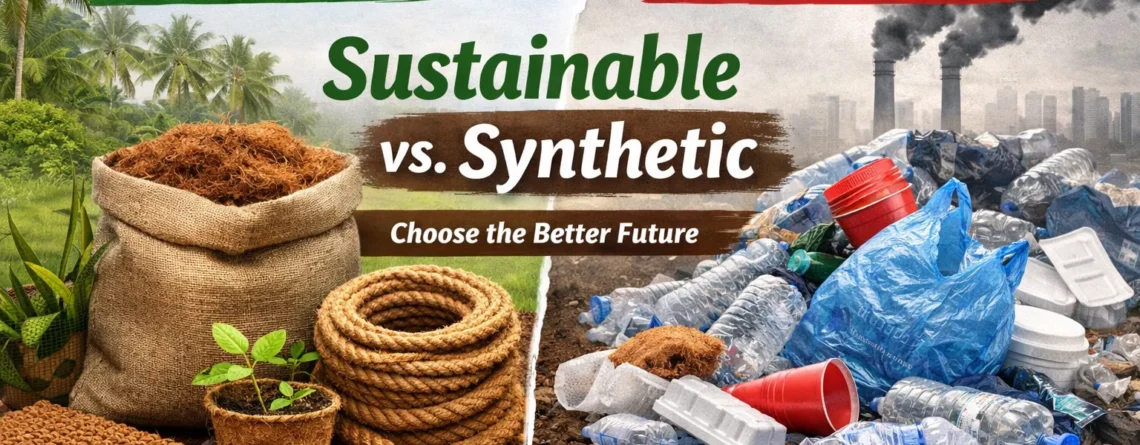
As concerns around plastic pollution and environmental degradation grow, consumers and institutions are actively seeking sustainable alternatives. One such material gaining renewed relevance is coir—a natural fibre derived from coconut husk. Long used in traditional applications, coir today offers a powerful, eco-friendly substitute for plastic and synthetic materials.
What Makes Coir Sustainable?
Coir is a renewable, biodegradable, and low-impact natural fibre. Unlike plastic-based products that remain in the environment for decades, coir decomposes naturally without releasing harmful residues. It is sourced from agricultural by-products, ensuring minimal ecological disruption.
Key sustainability advantages include:
- 100% biodegradable and compostable
- Low carbon footprint during production
- No microplastic pollution
- Renewable and abundantly available
Coir vs Plastic: A Practical Comparison
Plastic products may offer short-term convenience, but they come with long-term environmental costs. Coir products, on the other hand, provide durability while aligning with sustainable living goals. Whether used in mats, ropes, gardening products, or geo-textiles, coir performs reliably without compromising the environment.
The COIR EMPOWER Approach
At COIR EMPOWER, sustainability is not a marketing claim—it is the foundation of production. By promoting coir as a viable alternative to synthetic materials, the initiative supports responsible consumption while creating livelihoods rooted in tradition.
Conclusion
Choosing coir products is a conscious step toward reducing plastic dependency and supporting environmentally responsible practices. As sustainability moves from choice to necessity, coir stands out as a material aligned with both nature and future needs.
Leave a Reply